How Much Does It Cost to Install a New Hot Water System in 2026?
Hot Water Installation Costs 2026: Full Price Guide
Installing a new hot water system in Australia typically costs anywhere from $800 for a basic electric replacement to over $6,500 for a solar or heat pump system with full installation. Where you land in that range depends on the system type, tank size, and how much extra work your plumber needs to do to get it connected safely.
If you're staring down a broken hot water system or planning ahead for a renovation, here's the full breakdown for 2026, including what pushes prices up, what you can trim, and how to tell if a quote is fair.
How Much Does Hot Water Installation Cost on Average?
Most Australian homeowners pay between $1,200 and $3,500 for a straightforward hot water system installation, including the unit and labour. Simple like-for-like swaps sit at the lower end. Brand-new installs or system upgrades sit higher.
National Average Cost Range
Here's a rough guide across the board:
- Basic electric storage tank: $800 - $2,200
- Gas storage tank: $1,200 - $2,800
- Gas or electric tankless (instant): $1,800 - $4,000
- Solar hot water system: $3,500 - $6,500+
- Heat pump system: $3,000 - $5,500
These figures include the unit itself plus standard installation labour. They don't include extras like pipe rerouting, electrical upgrades, or council permits, which we'll get into below.
Cost for New Installation vs. Replacing an Existing Unit
Replacing an existing unit is almost always cheaper than a first-time install. If the plumbing, gas line, and electrical connections are already in place, your plumber is mostly just swapping the unit and reconnecting existing lines.
- Like-for-like replacement: Usually 1-2 hours of labour, minimal extra parts. Expect to pay closer to the lower end of the ranges above.
- New installation or system-type switch (e.g. going from electric to gas, or storage to tankless): This often means new pipework, a new gas line, extra electrical capacity, or a different mounting location. Add $500-$1,500 on top of the base unit and labour cost.
If you're switching system types entirely, it's worth reading up on signs you need a new water heater before you commit, so you're confident the upgrade is actually necessary and not just a costly detour.
Hot Water Installation Costs by System Type
Each system type has a different price profile, and the cheapest unit upfront isn't always the cheapest option over its lifespan.
Electric Water Heater Installation Cost
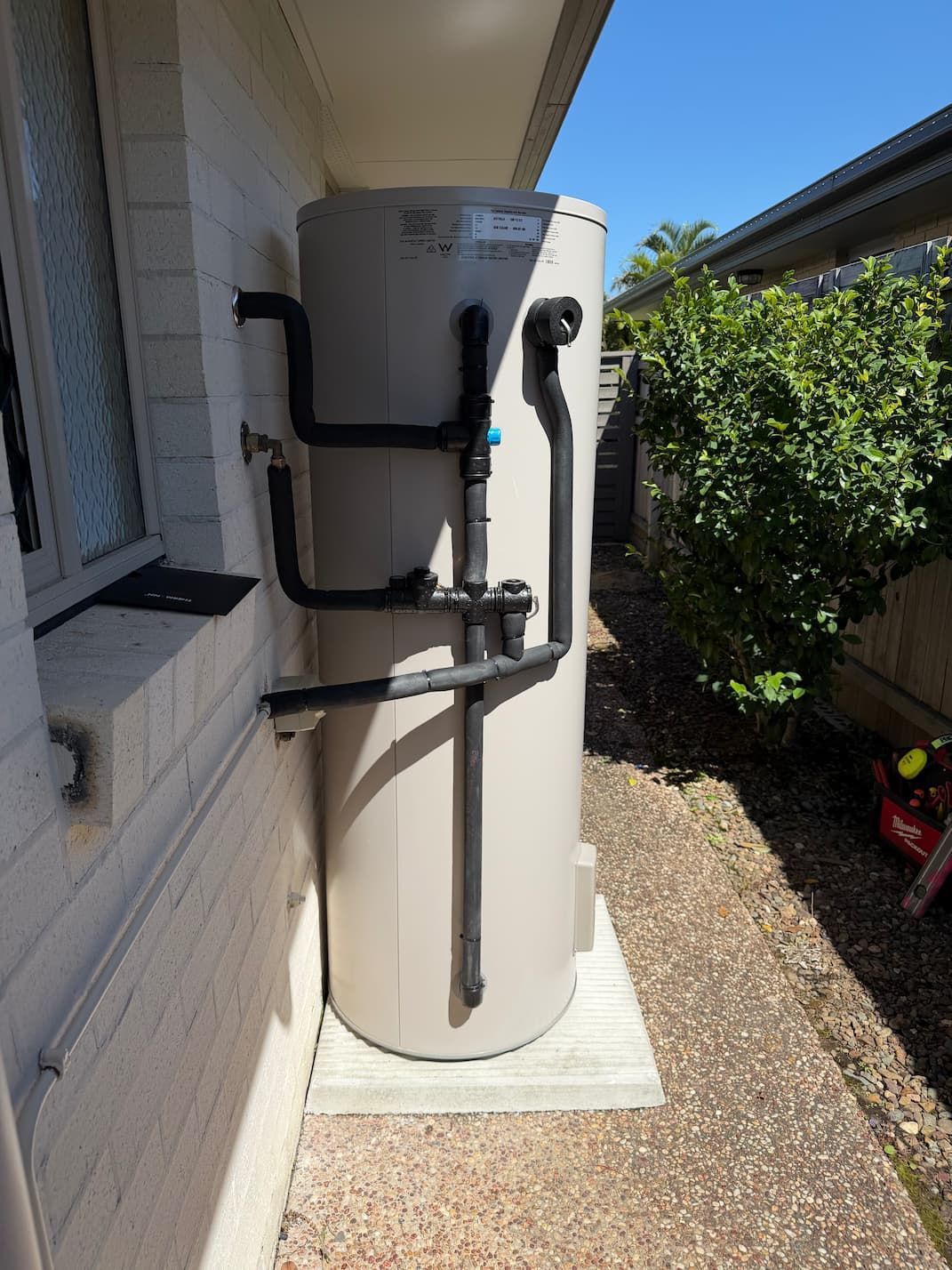
Electric storage tanks remain the most affordable option to buy and install, typically $800-$2,200 installed. They're simple to fit, don't need gas lines, and work anywhere with standard power. The trade-off is higher running costs over time compared to gas or heat pump systems.
Gas Water Heater Installation Cost
Gas storage systems run $1,200-$2,800 installed. If you don't already have a gas line to the installation point, budget extra for a licensed gas fitter to run new pipework, which can add several hundred dollars depending on distance and access.
Tankless/Instant Water Heater Installation Cost
Instant (continuous flow) systems cost $1,800-$4,000 installed. They're compact, never run out of hot water, and last longer than storage tanks, but installation is more technical. It often requires a larger gas line, additional venting, or an upgraded power supply. Check out our comparison of the best tankless water heaters if you're weighing up models before getting quotes.
Solar Hot Water System Installation Cost
Solar systems are the biggest upfront investment at $3,500-$6,500+ installed, but they cut ongoing energy costs substantially, especially in sunnier parts of the country. Costs vary a lot depending on roof type, panel placement, and whether you need a booster (gas or electric backup). Our solar hot water system guide breaks down how these systems work and whether your roof is suited to one.
Heat Pump Water Heater Installation Cost
Heat pumps sit at $3,000-$5,500 installed. They run on electricity but use far less energy than a standard electric tank by extracting heat from the air. They need decent airflow around the unit and a bit more space than a standard tank, which can affect placement and cost if your yard is tight.
Hot Water Installation Costs by Tank Size/Capacity
Tank size has a real impact on price, both for the unit itself and, in some cases, the labour needed to install and support it.
Small Households (up to 50L/2 people)
Small units or compact instant systems suit singles or couples. Expect to pay toward the lower end of each system type's range, often $800-$1,800 installed for electric or gas storage options.
Medium Households (3-4 people)
Most family homes need a 125-160L storage tank or an appropriately sized continuous flow unit. This is the most common installation size, generally $1,500-$3,200 depending on system type.
Large Households (5+ people)
Bigger households need 250-315L tanks or multiple continuous flow units to keep up with demand. These larger units cost more upfront and sometimes need reinforced mounting or additional pipework, pushing installed costs to $2,500-$4,500 or more.
What Factors Affect Hot Water Installation Costs?
The unit price is only part of the equation. Several other factors shape your final invoice.
Labour and Plumber Call-Out Fees
Labour typically makes up 30-50% of your total cost. Straightforward swaps might take 1-2 hours; new installs or system changes can take half a day or more. Always ask whether a quote is a flat rate or hourly, and whether the call-out fee is included.
Permits and Compliance Requirements
Gas installations and some electrical upgrades require compliance certificates and, in some council areas, permits. A licensed plumber or gas fitter will handle this as part of the job, but it can add $100-$300 to your total.
Location and Accessibility (Indoor vs. Outdoor, Roof Access for Solar)
Tight spaces, elevated positions, or hard-to-reach roof areas for solar panels all add time and sometimes specialised equipment. Outdoor units in easily accessible spots are generally the cheapest to install.
Rerouting Pipes, Gas Lines, or Electrical Upgrades
If your new system needs a different water pressure, a bigger gas line, or a dedicated circuit, this is where quotes can blow out. It's the single biggest source of "hidden" costs homeowners don't budget for.
Removal and Disposal of Old Unit
Most quotes include removing and disposing of your old system, but confirm this upfront. If it's not included, expect $50-$150 extra for safe removal and disposal, particularly for gas units that need depressurising.
Brand and Warranty Differences
Established brands with longer warranties (8-12 years on the tank) tend to cost more upfront but can save you money over the system's lifespan. Cheaper units often carry shorter warranties, meaning you might be paying for another installation sooner than expected.
Additional Costs to Budget For
Emergency/Same-Day Installation Fees
If your hot water system dies without warning, same-day or after-hours installation can carry a premium. Look for a plumber offering a genuine $0 call-out fee and transparent emergency rates so you're not caught out when you're already stressed.
Extended Warranties and Maintenance Plans
Some installers offer extended warranty packages or annual maintenance plans for an extra cost. These aren't essential, but they can be worthwhile for solar and heat pump systems, which have more moving parts than a basic storage tank.
Rebates, Incentives, and Tax Credits
Depending on your state, there are often rebates available for switching to solar or heat pump systems, particularly when replacing an old electric resistance tank. These schemes change regularly, so ask your plumber what's currently available in your area, it can meaningfully offset the higher upfront cost of an efficient system.
How to Save Money on Hot Water Installation
Getting Multiple Quotes
Get at least three quotes before committing. Prices for the same job can vary by hundreds of dollars between providers, and a detailed written quote lets you compare apples with apples rather than guessing what's included.
Choosing the Right System Size and Type
Oversizing a system wastes money on both the unit and running costs. Undersizing means you'll run out of hot water and could be back to square one sooner than expected. A plumber can calculate the right size based on your household size and usage habits.
Timing Your Installation
Replacing a system before it fails completely gives you time to compare quotes and avoid emergency rates. If your current unit is over 10 years old, is rusting, or making noise, it's worth researching now rather than waiting for a leak.
DIY vs. Professional Installation: Is It Worth the Risk?
DIY installation isn't worth the risk, and in most cases, it isn't even legal. Gas and electrical connections for hot water systems must be completed by a licensed plumber or electrician in Australia. Attempting it yourself can void your warranty, breach building codes, and create genuine safety hazards from gas leaks or electrical faults.
The only "DIY" savings realistically available are things like clearing access to the installation site beforehand or removing an old, empty tank yourself if it's safe to do so. Beyond that, professional installation isn't a cost to cut corners on.
How to Get an Accurate Quote for Your Home
The most accurate quotes come from a plumber who inspects your home rather than quoting over the phone. A proper quote should cover:
- The unit cost, including brand and warranty length
- Labour, based on an in-person or photo-based assessment
- Any pipe, gas line, or electrical work required
- Removal and disposal of your old system
- Permits or compliance certificates, if applicable
Ask for a written, itemised quote so you know exactly what you're paying for before work starts. If you want to compare your options with a team that offers upfront pricing and no surprise add-ons, you can find a licensed local plumber to assess your home and provide a clear, honest quote.
Once your new system is in, a bit of routine care goes a long way. These water heater maintenance tips can help you get the most life out of your investment and avoid an unplanned replacement down the track.
Frequently Asked Questions
How much does Bunnings charge to install a hot water system?
Bunnings doesn't install hot water systems directly, but partners with third-party providers or licensed plumbers for installation, so costs vary by location and system type. It's best to get a direct quote from a licensed local plumber to compare against any Bunnings-linked service pricing.
How much does it cost to install a hot water system in Australia?
Most Australian homeowners pay between $1,200 and $3,500 for a standard installation including the unit and labour, though solar and heat pump systems can run $3,500-$6,500 or more depending on complexity.
How much to install a 250L hot water system?
A 250L system, suited to larger households, typically costs $2,500-$4,500 installed depending on whether it's electric, gas, or heat pump, plus any extra work needed for mounting or pipework.
Do you need a plumber or electrician to replace a hot water system?
You need a licensed plumber for the water and gas connections, and in some cases a licensed electrician for electrical hookups on electric or heat pump systems. Many plumbing businesses have both trades covered, so one call can handle the full job.
Written by Justin from Celsius Plumbing
Meet Justin, the owner of Celsius Plumbing. With over 15 years of industry experience, Justin combines technical expertise with a commitment to clear communication and reliable service.