Distilled vs Filtered Water: What's Actually Best for Your Sunshine Coast Home?
Distilled water is water that's been boiled into steam and condensed back into liquid, leaving minerals, salts, bacteria and most chemicals behind. Filtered water, on the other hand, is tap water passed through a physical or carbon filter that traps some contaminants while keeping most minerals intact. Neither is automatically "better", it depends on what you're using it for.
If you're a Sunshine Coast homeowner trying to decide between a filtration system, a distiller, or just sticking with tap water, here's the practical breakdown.
What Is Distilled Water?
Distilled water is H2O in its purest practical form. It's made by boiling water, capturing the steam, and letting it cool back into liquid in a separate container. This process leaves behind almost everything that isn't water itself, including calcium, magnesium, sodium, chlorine, bacteria, and heavy metals.
Because nothing survives the boil-and-condense cycle except water vapour, distilled water is about as close to "just H2O" as you'll get from a home process. It's flat-tasting, mineral-free, and considered one of the purest forms of water available without laboratory-grade equipment.
How Is Distilled Water Made?
Distillation mimics the natural water cycle. Heat turns water into vapour, and cooling turns that vapour back into liquid, minus everything that couldn't evaporate with it.
The Distillation Process Step by Step
- Water is heated in a boiling chamber until it turns to steam.
- The steam rises into a condensing coil or chamber, away from the original water source.
- As the steam cools, it turns back into liquid water.
- This condensed water is collected in a clean container, while minerals, salts and most contaminants stay behind in the original chamber.
- Any leftover residue (scale, sediment, dissolved solids) is discarded.
Distillation vs Filtration: Why Boiling Removes More
Filtration relies on pores, membranes or carbon to physically block particles as water passes through. It's effective against sediment, chlorine taste, and some bacteria, but dissolved minerals and salts are small enough to slip through most standard filters.
Distillation doesn't rely on trapping anything. Since only water vapour rises during boiling, dissolved solids, most microorganisms, and many chemicals simply can't follow. That's why distilled water tests almost mineral-free, while filtered water still carries a fair amount of its original mineral content.
What's Removed From Distilled Water?
Distillation is thorough. It strips out the vast majority of what's dissolved or suspended in the original water.
Minerals, Salts and Metals
Calcium, magnesium, sodium, iron, lead and other metals are left behind in the boiling chamber. This is why distilled water tastes flat compared to tap or mineral water, there's nothing in it to give it flavour.
Bacteria, Viruses and Microorganisms
The high heat of boiling kills most bacteria, viruses and parasites, and since they don't evaporate with the steam, they're left behind with the residue. This makes distilled water one of the most reliably sterile options for sensitive uses.
Chemicals and Dissolved Gases
Many chemicals with a higher boiling point than water, along with dissolved gases like chlorine, are also reduced significantly. Some volatile compounds with a lower boiling point than water can theoretically carry over in steam, but a well-designed distiller minimises this.
Distilled Water vs Other Types of Water
Not all "pure" water is pure in the same way. Here's how distilled water stacks up.
Distilled Water vs Purified Water
Purified water is a broader term. It just means water that's been treated to remove contaminants down to a certain standard, using methods like reverse osmosis, deionisation, carbon filtration, or distillation itself. Distilled water is technically a type of purified water, but not all purified water is distilled.
Distilled Water vs Filtered Water
This is where most Sunshine Coast homeowners get confused, so it's worth a proper comparison since it's the choice most people are actually weighing up for their home.
- Filtered water keeps most minerals, improves taste and smell, and removes sediment, chlorine and some contaminants, but not dissolved salts or all bacteria.
- Distilled water removes almost everything, including minerals, giving a completely neutral, mineral-free result.
- Practicality: filtered water is usually delivered on tap via a plumbed system, ready whenever you need it. Distilled water is typically made in batches and isn't practical for whole-house use.
- Best fit: filtration suits everyday drinking, cooking and general household water. Distillation suits specific appliances or situations where mineral-free water matters.
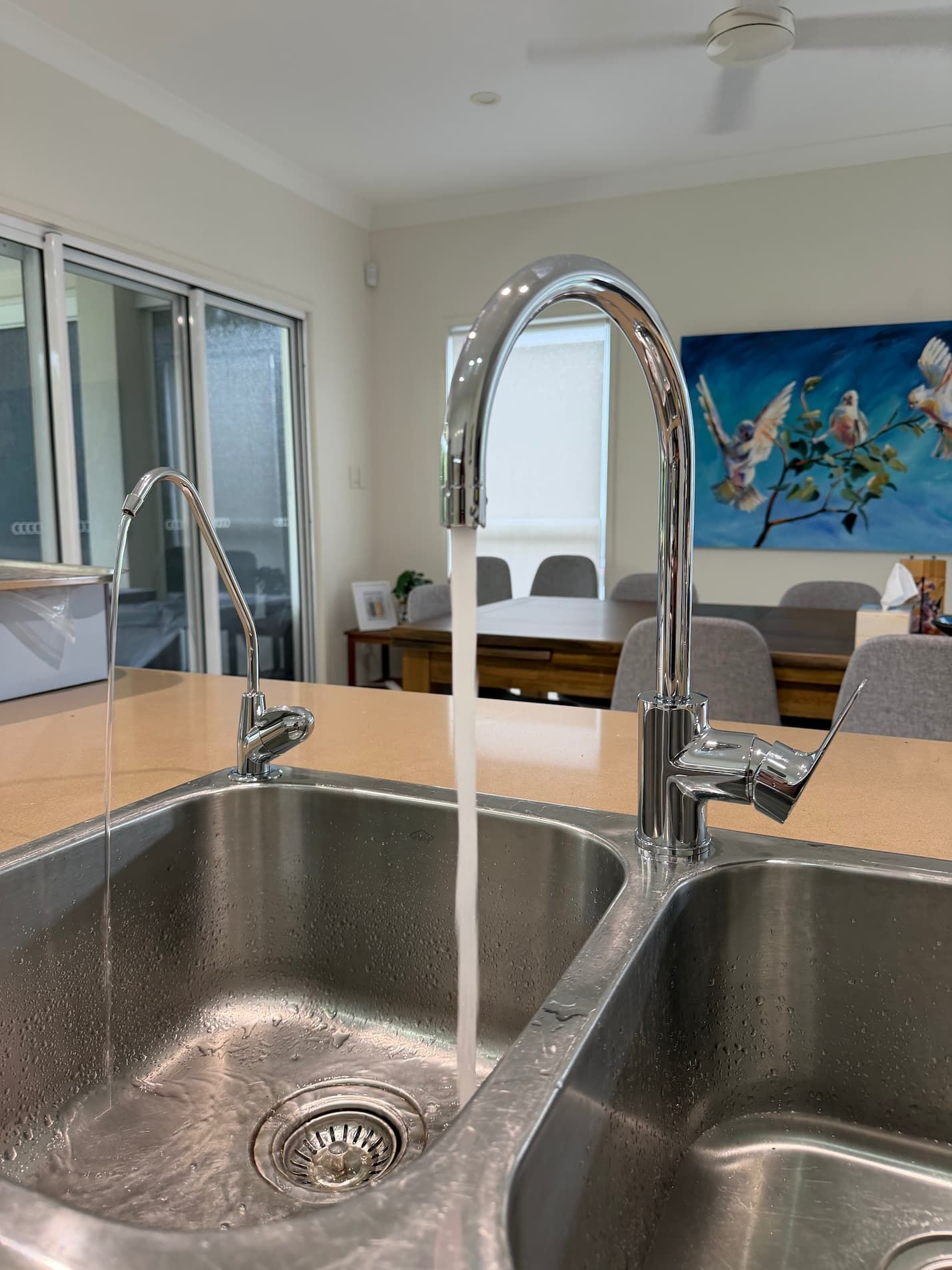
If you're weighing up home water filtration systems for your kitchen or whole house, it's worth understanding this difference before you invest, since a filter and a distiller solve very different problems.
Distilled Water vs Tap Water
Tap water on the Sunshine Coast is treated to safe drinking standards but still contains minerals, trace chlorine, and sometimes sediment depending on your suburb and plumbing age. Distilled water strips all of that out, for better or worse.
Distilled Water vs Spring or Mineral Water
Spring and mineral water are prized for their mineral content, often marketed on it. Distilled water is the opposite end of the spectrum, valued precisely because it has none.
Distilled Water vs Deionised Water
Deionised (DI) water has had charged mineral ions removed using resin filters, but it can still contain organic contaminants and microorganisms that distillation would kill. Distillation is generally considered the more thorough process for a truly neutral result.
Is Distilled Water Safe to Drink?
Yes, distilled water is safe to drink, but it's not necessarily the best everyday choice for most households.
Potential Benefits of Drinking Distilled Water
- No risk of contaminants, heavy metals or bacteria.
- Useful short-term if your regular water source is compromised or untested.
- A neutral base with nothing added, which some people prefer for taste consistency.
Potential Downsides
- Flat, sometimes unpleasant taste due to the total lack of minerals.
- No contribution to your daily mineral intake, which tap or mineral water naturally provides in small amounts.
- Can be slightly acidic and, over long-term exclusive use, may draw minerals from the body rather than provide them, according to some nutrition sources.
Who Should or Shouldn't Drink It Regularly
Occasional drinking is fine for most healthy adults. It's not usually recommended as your sole water source long-term, particularly for children, unless a health professional has advised it for a specific reason.
Common Uses of Distilled Water
This is where distilled water really earns its keep, in specific, practical applications rather than as your everyday glass of water.
Medical and Health Uses
- CPAP machines and humidifiers, where mineral buildup can damage the unit or reduce its lifespan
- Nebulisers, where purity matters for respiratory health
- Wound cleaning, when instructed by a medical professional
If you use a CPAP machine, it's worth checking best water for CPAP machines guidance from your device manufacturer, since most explicitly require distilled water to avoid mineral scale in the humidifier chamber.
Household Uses
- Steam irons and clothes steamers, to prevent mineral scale clogging the vents
- Aquariums, particularly for sensitive fish species that need mineral-free water as a base before remineralising
- Plant watering for mineral-sensitive species
Automotive Uses
- Topping up lead-acid car batteries, where mineral deposits from tap water can shorten battery life
- Cooling systems and radiators, to reduce scale and corrosion inside the engine
If you're doing this yourself, our guide on how to top up your car battery covers the basics of doing it safely.
Lab, Industrial and Cosmetic Uses
Laboratories rely on distilled water for accurate testing since mineral content can skew results. It's also common in skincare formulations and industrial processes where consistency matters more than anything else.
Can You Make Distilled Water at Home?
Yes, and it's simpler than most people expect, though it's slow and only practical for small quantities.
Simple Stovetop Method
Boil water in a pot with a heatproof bowl floating in the centre to collect condensation, and place an inverted lid on top (ice on the lid speeds up condensation). Steam rises, hits the cool lid, condenses, and drips into the bowl. It's a genuine, if slow, way to distil small amounts.
Using a Home Water Distiller
Countertop distillers automate this process, boiling water and condensing steam into a separate collection container. They're a practical option if you regularly need distilled water for a CPAP machine, aquarium or medical use.
Is Homemade Distilled Water as Pure as Store-Bought?
Done properly, homemade distillation gets very close to commercial purity. The main risks are cross-contamination from unclean equipment or containers, so cleanliness matters as much as the process itself.
Where to Buy Distilled Water
Distilled water is widely available at supermarkets, pharmacies and hardware stores across the Sunshine Coast, usually sitting alongside spring and purified water. When buying, check the label specifically says "distilled", since "purified" or "purified drinking water" doesn't guarantee the same mineral-free result.
For appliance use like CPAP machines or irons, stick to water labelled specifically for that purpose where available, as some brands formulate slightly differently for these applications.
If your main concern is everyday drinking water quality rather than a specific appliance need, a proper filtration setup at home is usually the more practical long-term solution than routinely buying distilled water. It's also worth comparing is bottled water better than tap water if you're still deciding what's right for your household's daily drinking water.
Frequently Asked Questions
How can I make distilled water at home?
Boil water in a pot with a heatproof bowl floating inside to catch condensation, place an inverted lid on top, and let steam rise, cool, and drip into the bowl. A countertop home distiller automates this process if you need distilled water regularly.
Is distilled water just boiled water?
No. Boiled water still contains all its original minerals and salts. Distilled water goes a step further, capturing the steam from boiling and condensing it separately, which leaves minerals and contaminants behind.
Can I drink distilled drinking water?
Yes, it's safe to drink, but it lacks the minerals found in tap, filtered or mineral water and can taste flat. It's fine occasionally but isn't usually recommended as your sole daily water source long-term.
Is distilled water just H2O?
It's about as close to pure H2O as you can get through a home or commercial process, since distillation removes almost all minerals, salts, bacteria and many chemicals, leaving mostly just water molecules.
Written by Justin from Celsius Plumbing
Meet Justin, the owner of Celsius Plumbing. With over 15 years of industry experience, Justin combines technical expertise with a commitment to clear communication and reliable service.