
What gets upgraded when your hot water system is replaced
A new system has to meet today's rules, even if the old one went in twenty years ago. Here's what we update as part of a replacement, all included in the fixed price we quote.
- Tempering valve
- Fitted or replaced so bathrooms get water no hotter than 50°C, as Queensland rules require when a water heater is installed or replaced.
- Relief valve and drain line
- A new pressure and temperature relief valve comes with the system, and its drain is run so discharge goes somewhere safe and visible.
- Isolation and non-return valves
- Checked on the cold supply and replaced if worn, so the system can be shut off for servicing and hot water can't flow back into the cold line.
- Pressure limiting valve
- Added where mains pressure is high enough to strain a new tank or keep the relief valve dripping.
- Safe tray
- Fitted under indoor and upstairs systems so a future leak is caught and drained instead of soaking the floor.
- Base and position
- A level, solid base, and for outdoor systems, the most sheltered position that still allows safe access and airflow.
- Insulated pipework
- Hot and cold lines near the heater are lagged to cut heat loss and protect them from the weather.
- Compliance paperwork
- Water heater installation is notifiable work in Queensland, so it's lodged with the QBCC once the job's done.
Hot water supply and install
We supply the system and install it, so you deal with one business and one fixed price. That price covers the new unit, valves, a tempering valve where required, removal of the old system, and lodging the compliance paperwork. If you've already bought a system, we can install that too.
Replace your hot water tank
Most tank replacements are like for like: same type, similar size, same position, so the existing water, power or gas connections are reused and the job takes a few hours. If your old tank is leaking, we can usually replace it the same day. Once it's in, here's how long a new system takes to heat up.
New hot water system installation
For new homes, renovations, granny flats and upgrades, we size and install the right system from scratch, including new pipework and gas connections where needed. Our restricted electrical licence covers disconnecting and reconnecting water heaters; where a new circuit or wiring is needed, that work is done by a licensed electrician. Thinking of switching from gas?
What does hot water replacement cost?
Price depends on the type and size of system and how much needs to change at the installation. See our Sunshine Coast hot water replacement cost guide for typical price ranges.
What happens on replacement day
Most replacements are done in a single visit. Here's how a typical like-for-like job runs, so you know what to expect.
- Confirm the system and size. We check the compliance plate on the old unit, your household size and your tariff, and confirm the new system suits how you use hot water now.
- Make it safe. The power or gas is isolated and the cold water turned off at the valve.
- Drain and remove the old unit. A storage tank holds hundreds of litres, so draining takes a while. The old unit is disconnected and taken away.
- Set and connect the new system. The new unit goes on a level base, and the water, power or gas connections are made, with new valves and fittings where needed.
- Bring it up to current rules. Tempering valve, relief valve and drain, and any other items listed above are fitted or replaced.
- Fill, test and commission. The tank is filled and purged of air, then switched on. We check for leaks and test the temperature at the taps.
- Clean up and explain. We show you where the isolation valve and switch are, explain any settings or timers, and leave the area tidy.
Once the job's finished, the notifiable work form is lodged with the QBCC, and you'll receive a copy of it for your records.
What can make a replacement more involved
Most changeovers are straightforward. A few things add time, and we'll point them out when we quote:
- Indoor or upstairs systems
- Carrying units in and out takes longer, and a safe tray and drain are needed underneath.
- Older pipework
- Old galvanised or brittle fittings near the heater may need replacing so the new connections are sound.
- Moving the system
- A new position means new pipework and checking clearances from windows, doors and boundaries.
- Access
- Tight side passages, steep blocks and long driveways can mean extra hands to move a full-size tank safely.
Whatever applies, it's included in the fixed price we give you before any work starts.
Hot water replacement on the Sunshine Coast
A few local conditions shape what we recommend:
- Salt air. Close to the beach, outdoor units and fittings corrode faster. A sheltered position and regular anode checks help a new system last.
- Rainwater and bore water. Common in the hinterland and on acreage. Water quality affects the anode and the tank, so we check what supply you're on before choosing a system.
- Units and townhouses. Systems in shared buildings can involve body corporate approval, access arrangements or shared plant. See hot water in units.
- Holiday rentals. Back-to-back guests can empty a tank that suits a normal household, so short-stay homes often need a bigger system or continuous flow.
Upgrading to a more efficient system
We'll compare the options with you, including what each costs to run.
What size system do you need?
Size depends on how many people live in the home, how many showers run at once and your electricity tariff. As a starting point, here are typical sizes for a household of four:
| System | Household of four |
|---|---|
| Electric storage, continuous tariff | 125 to 160 litres |
| Electric storage, off-peak tariff | 250 to 315 litres |
| Gas storage | 135 to 170 litres |
| Gas continuous flow | 20 to 26 litres per minute for two bathrooms |
Off-peak electric tanks need to be bigger because they only heat at set times. One or two people can usually go a size smaller, and five or more a size bigger. See our hot water sizing guide, and we'll confirm the right size on site.
Switching to a different type of system
A replacement is the best time to change system type, because the old unit is coming out anyway. Here's what each switch involves.
- Electric tank to gas
- Needs a gas supply. If the home isn't connected to mains gas, that means LPG cylinders, a regulator and a new gas line. The unit also has to sit far enough from windows, doors and vents to meet gas clearance rules. See gas hot water.
- Storage tank to continuous flow
- Gas continuous flow units need a gas line big enough for their gas input and a power point for their controls, and the unit's litres per minute has to match how many showers run at once. Electric continuous flow units draw a lot of power, so many homes would need an electrical upgrade. See continuous flow hot water.
We check what your site needs before we quote, and the fixed price includes the extra work.
How long each type of system lasts
- Electric storage8 to 12 years
- Gas storage8 to 12 years
- Gas continuous flow15 to 20 years
Like-for-like or a different system?
Replacing with the same type is quicker and usually the lowest upfront cost, because the existing connections are reused. It's often the right call when:
- the old system suited your household and you were happy with it
- you need hot water back today and the old tank has failed
- you rent the property out, or you plan to sell soon
It's worth looking at a different type when:
- you're paying for LPG cylinders and want to stop
- your household has grown, or you keep running out of hot water
- the old system is in a spot that's noisy, cramped or hard to reach
We'll talk you through both options and price them, so you can decide with the numbers in front of you.
Recent jobs
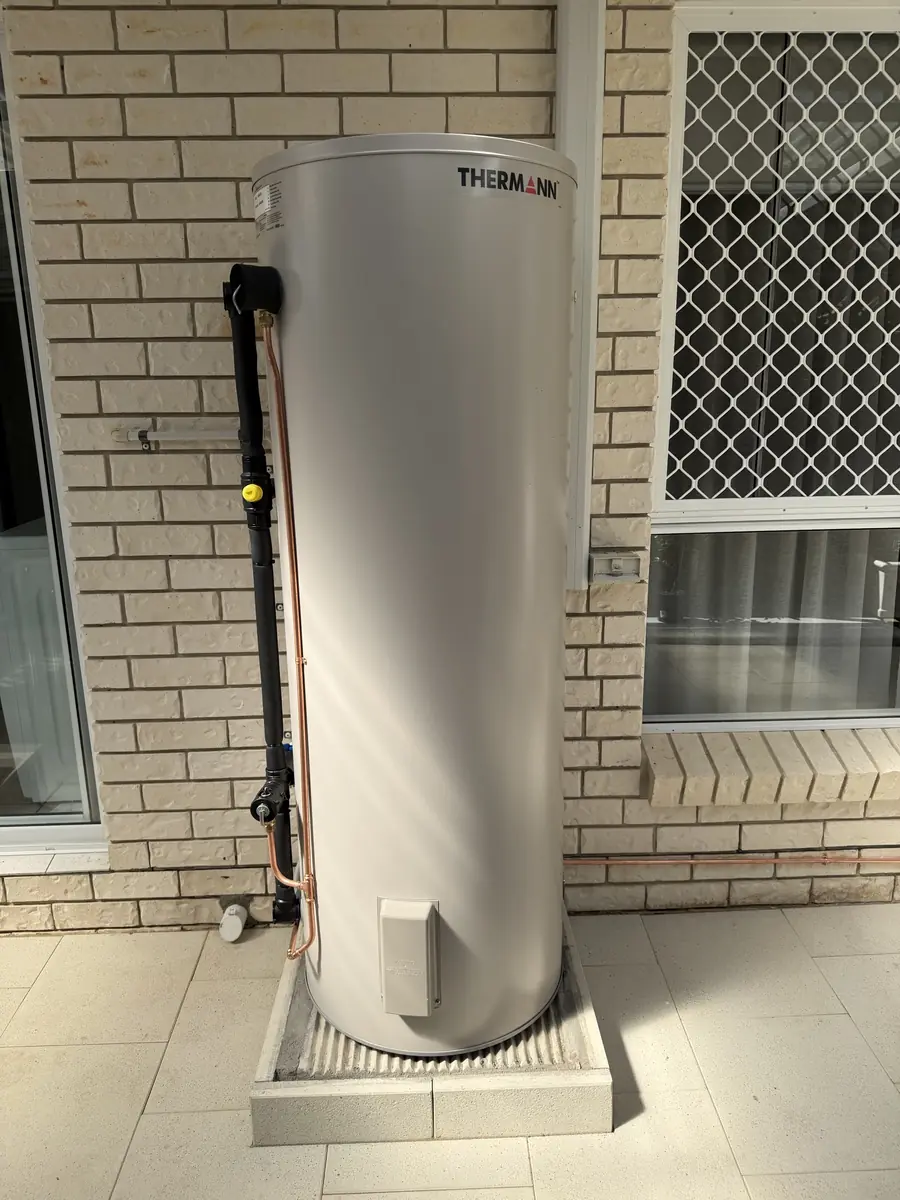
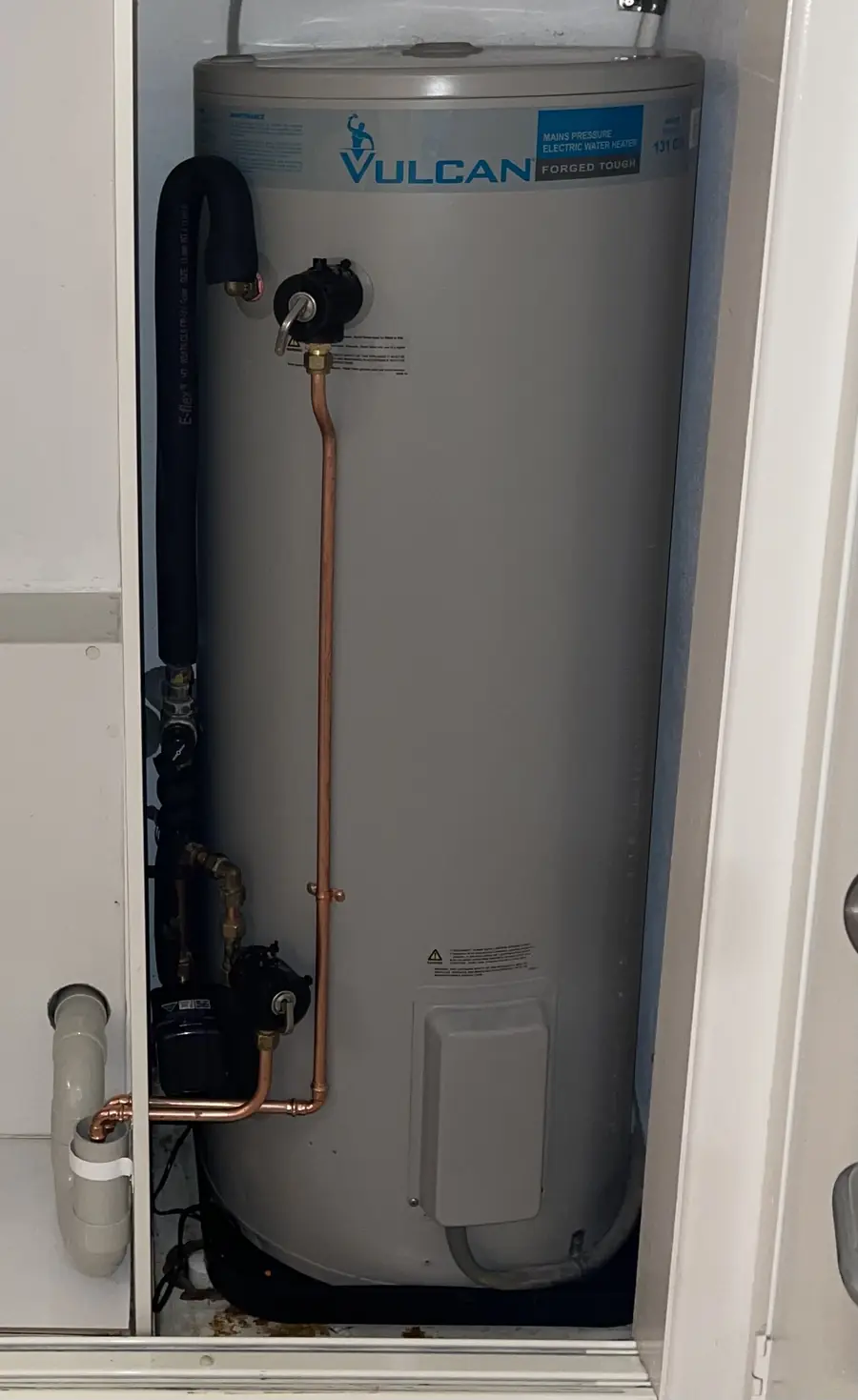
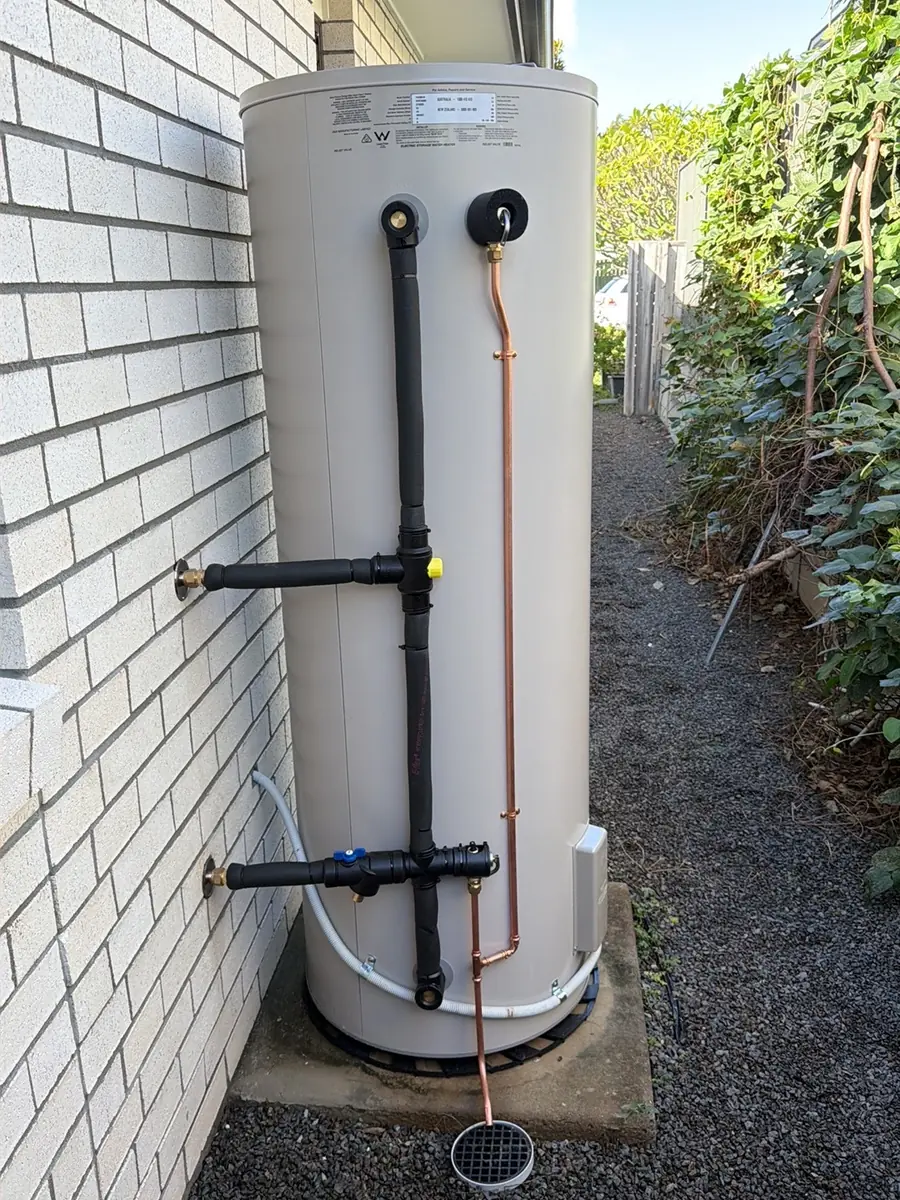
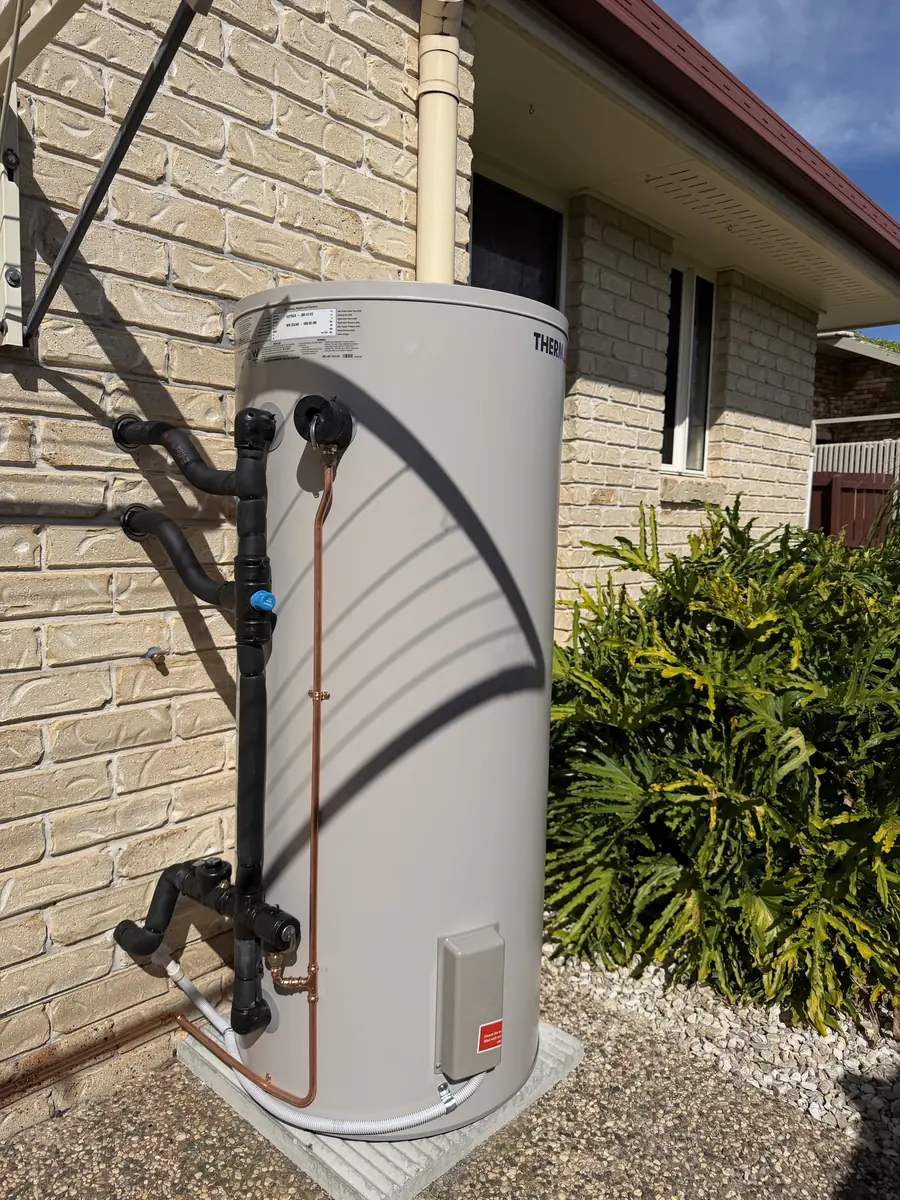
What customers say
5.0 on Google · 289 reviewsReal reviews from 289 Google reviews, copied word for word.
Justin is a true professional, his work was so impressively neat the other trades on our kitchen reno commented on how good it was. He’s happy to answer your questions with a smile, even when they’re coming from someone who has no idea about plumbing. Due to some cabinet problems he ended up visiting our job multiple times but he didn’t charge us anymore than quoted, even though it wasn’t his fault. He’s extremely fair and generally just a really nice and decent guy. We’d heard so many scary stories about expensive, over charging and bad plumbers before we started that we feel like we struck gold with Justin. We definitely recommend his services!
Justin was great, punctual, friendly and accomodating. He replaced our hot water system promptly with no fuss. I think his price was good and he left the site immaculately clean. Most of all he was very nice and kind. Highly recommend.
Thanks Justin for fixing our hot water system. It was lovely to meet a young man who is so passionate and informative about his work. I have no hesitation in recommending Justin to anyone requiring a good plumber. Thanks again for your quick and prompt service. It was lovely to meet you.
Justin is a great communicator, I would highly recommend. Hard to find reliable trades people who know their craft, Justin definitely knows what he is doing. He is extremely helpful and happy to discuss what you need without feeling like he needs to be somewhere else. I will use Justin again for any further plumbing work i need.
Celcius Plumbing Did an Outstanding job, same day service, couldn’t have asked for anything more. Very Professional and knowledgeable. Ensured that I knew all about the new Hot Water System and that everything was working perfectly before Justin Left.
I asked Justin to come and look at an issue i had down the side of my garage that was holding water and running the potential of serious water damage to my house. He came around almost immediately and proposed a solution. I booked the job in with him and he turned up on the day and on time which was great. He completed the job and left the area clean and tidy. He has fantastic Customer Service and nothing is a hassle for him. I am definitely getting him to do more work and I highly recommend him. Thanks heaps Justin. See you again.
Best tradie experience ever! Excellent service from start to finish. Justin was friendly, professional, and more than punctual. My kitchen tap broke unexpectedly and I had to turn the water off to the entire house. Not only did Justin respond promptly, but he also took the time to come out at short notice, which was greatly appreciated. Justin was genuine, knowledgeable, honest, and fairly priced. I have absolutely no regrets choosing to support a small local business. Our dog Wilson absolutely adored him too. Thank you for letting him supervise the job, Justin! 😂 We will definitely be recommending you to all our family and friends and won’t hesitate to call again in the future. Thanks again! 🙏
Fantastic service! He responded to my enquiry really quickly and communication was excellent from start to finish. He was reliable, professional and did a great job. The pricing was very affordable and reasonable, which was a huge bonus. It’s great to find a plumber who provides quality service without charging a fortune. Highly recommend and would definitely use him again!
Justin was prompt, professional, efficient and did an excellent job. He is very friendly guy and even though the job was heavier work than we initially thought it would be he still did it with a smile. Have no hesitation in recommending Justin for any of your plumbing needs.
Moved into an older property needed some facilities installed, replaced and repaired including toilet, shower, water tank, dishwasher, kitchen sink, new vanity and tap ware. Justin was very prompt and did a fantastic job. He takes a lot of pride in his work and am so happy with everything. Highly recommend him.
Exceptional service! Rang Justin at 5pm on a Friday with my water tank overflowing. He was grocery shopping, paid for his stuff and was at my place 20 minutes later like he said. Explained everything as he went and had it fixed that night. And what a nice guy! Great local business, highly recommend, and I'll definitely be calling him next time.
Had an awesome experience with Justin from Celsius Plumbing. Super friendly guy, always smiling and very easy to deal with. His quote was very honest and fair, and the whole experience from start to finish was great. It’s always good to find someone reliable, genuine and straightforward. Would definitely use Justin again and highly recommend Celsius Plumbing to anyone looking for a great plumber!
Justin replaced our flick mixer and laundry taps today. He was punctual, professional, gave great advice and price upfront. We were very happy with his service and will definitely use him again for our plumbing needs. Thanks Justin!
Justin was amazing and will definitely be the person we call from now on. We had a leaky toilet and he fit us in really quickly to have a look. A few days later another leak popped up. When I called him back he remembered my name which is so nice and he moved his day around so he could come back that day. For what is probably considered a pretty small job, he really went above and beyond for us. I know he's the person we’ll be calling when we have to tackle the bigger jobs.
Common questions
Do I need a tempering valve with a new hot water system?
Yes. In Queensland, hot water delivered to bathrooms must be no hotter than 50°C, so a tempering valve is fitted with new and replacement systems where required.
Will you take the old hot water system away?
Yes. We remove and dispose of the old system as part of the job.
Can you replace a hot water system the same day?
Usually, yes. We carry popular systems and common parts, so most like-for-like replacements on the Sunshine Coast are done the same day you call. Changing to a different type of system can take longer if new connections are needed.
Can I replace a hot water system myself?
No. In Queensland, installing or replacing a water heater is regulated plumbing work and notifiable work, so it must be done by a licensed plumber and lodged with the QBCC.
What paperwork do I get after a replacement?
The installation is lodged with the QBCC as notifiable work, and you'll receive a copy of the form for your records. Keep it with your manufacturer warranty details.
Is a hot water replacement covered by warranty?
Yes. The new system comes with the manufacturer's warranty, which varies by brand and model, and our installation is covered by our lifetime workmanship warranty.
What size hot water system should I replace mine with?
It depends on your household and tariff. For a family of four, an off-peak electric tank is usually 250 to 315 litres, while a tank on a continuous tariff can be 125 to 160 litres. See our sizing guide for every system type.
Do I need council approval to replace a hot water system?
No permit from council is needed. In Queensland, installing or replacing a water heater is notifiable work, which a licensed plumber can do without a local government permit. The plumber then lodges a Form 4 with the QBCC within 10 business days.
Do I need a pressure limiting valve?
If your mains water pressure is high, yes. Under AS/NZS 3500.1, static water pressure inside a building shouldn't be more than 500 kPa, and high pressure is a common cause of dripping relief valves and shorter tank life. We test the pressure on every install and tell you if one is needed.
Helpful guides
- Hot water installation: 20 common questions answered
- Hot water replacement cost on the Sunshine Coast
- What size hot water system do I need?
- Best hot water system for Sunshine Coast homes
- Repair or replace your hot water system?
- How long does a new hot water system take to heat up?
- Hot water in a unit: who's responsible, owner or body corporate?
Brands we work on
We repair, service and replace systems from all the major brands, including:
Sources and further reading
- Business Queensland: hot water systems (50°C delivery, 60°C storage, temperature control devices)
- Queensland Government: requirements for installing temperature control devices (PDF)
- QBCC: guide to notifiable work for licensees (PDF)
- Queensland Health: Legionella, legionellosis and Legionnaires' disease
- Business Queensland: hot water systems (temperature control devices on new and replacement systems)
- QBCC: Form 4 notifiable work (installing, replacing or removing a water heater)
- Residential Tenancies Authority: emergency and routine repairs
Hot water replacement near you
We cover every suburb on the Sunshine Coast, from Pelican Waters to Noosa. Popular areas include: